
William Johnson Howson
Biography
The failure at Arnhem did not bring peace before Christmas, and the war was destined to go into 1945. The Nazis were far from beaten and the Allies had to consolidate their positions and build up their supplies. Royal Marine Commandos captured the island of Walcheren at the mouth of the entrance to Antwerp; the ultimate capture of the Port of Antwerp eased the supply problems of the Allied armies.
As Christmas 1944 approached, the Allied armies settled down and waited for better weather to come. Hitler used the opportunity to build up his armies and assembled an exceptionally large force of experienced troops and tanks in the Ardennes Forest. The Americans had only lightly armed inexperienced troops opposite the Ardennes. In bad weather Hitler’s Panzer forces broke through the American forces, which went into full retreat. The German objective was Antwerp and to split the British and American armies. Fortunately for the Allies the weather improved and the Panzers ran out of fuel, with their plan failed.
A quieter period ensued before the Spring of 1945 when another large-scale parachute drop saw the British Army finally across the Rhine and into Germany. With the Americans making equal progress, the end was in sight. The Russians fought the Germans through Poland and also into Germany itself. Throughout this period of the winter 1944 and spring 1945 the Royal Air Force continued to attack targets in Germany. One of those involved was William Johnson Howson.
William was born on the 21st January 1920. His parents were John and Eva May Howson. In the 1930s William lived with Harry and Ethel — two of his siblings — at 19 Castle Road. He was an apprentice draughtsman.
Service Record
William voluntarily enlisted in the RAF on the 5th February 1940. He was promoted through the ranks from Leading Aircraftman to Warrant Officer 949392 W. J. Howson. On enlisting he was placed in the reserve, and subsequently completed his training in the latter part of 1940 and early part of 1941. He trained as an air gunner and wireless operator.
He was then posted to 296 Squadron. This squadron was initially used for dropping leaflets over France, and then became a squadron for dropping paratroopers. After a spell with an anti-aircraft cooperation unit, William was posted to 577 Squadron. This unit practised bombing home targets to give experience to the anti-aircraft crews. William finally transferred to 550 Squadron with Lancaster bombers. The squadron was located at a No. 1 Group Bomber Command base, North Killingholme in Lincolnshire.
How They Died
In the late afternoon of 3rd February 1945, the squadron took off to attack the Prosper Benzol Plant at Bottrop near Essen. The attack was believed to be successful, but William’s Lancaster was shot down by a night fighter. His Lancaster crashed into a field near the village of Westerbeek in The Netherlands. William and all his crew were killed.
Where They Rest
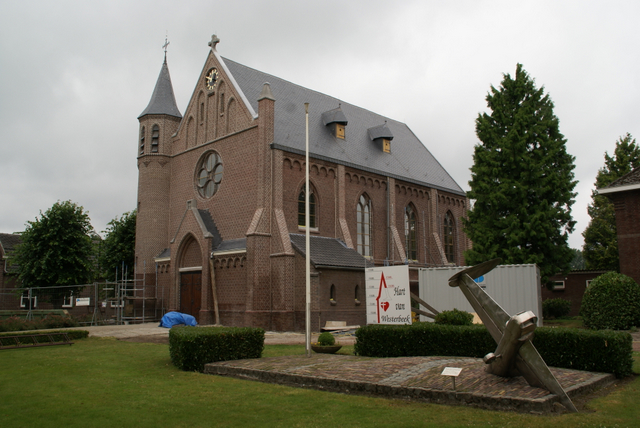
William and his fellow crew members were all buried by the local Dutch people in the churchyard of their village Roman Catholic Church. The seven aircrew are buried side by side. These graves, and the graves of four British soldiers, are tended by local Dutch people. Outside on the village green lies a scaled sculptured model of the Lancaster tail-plane, made from metal of the downed aircraft. On William’s gravestone it reminds us of his hometown and that, “He rests content and so must we.” William Johnson Howson is also remembered on the Natland War Memorial.
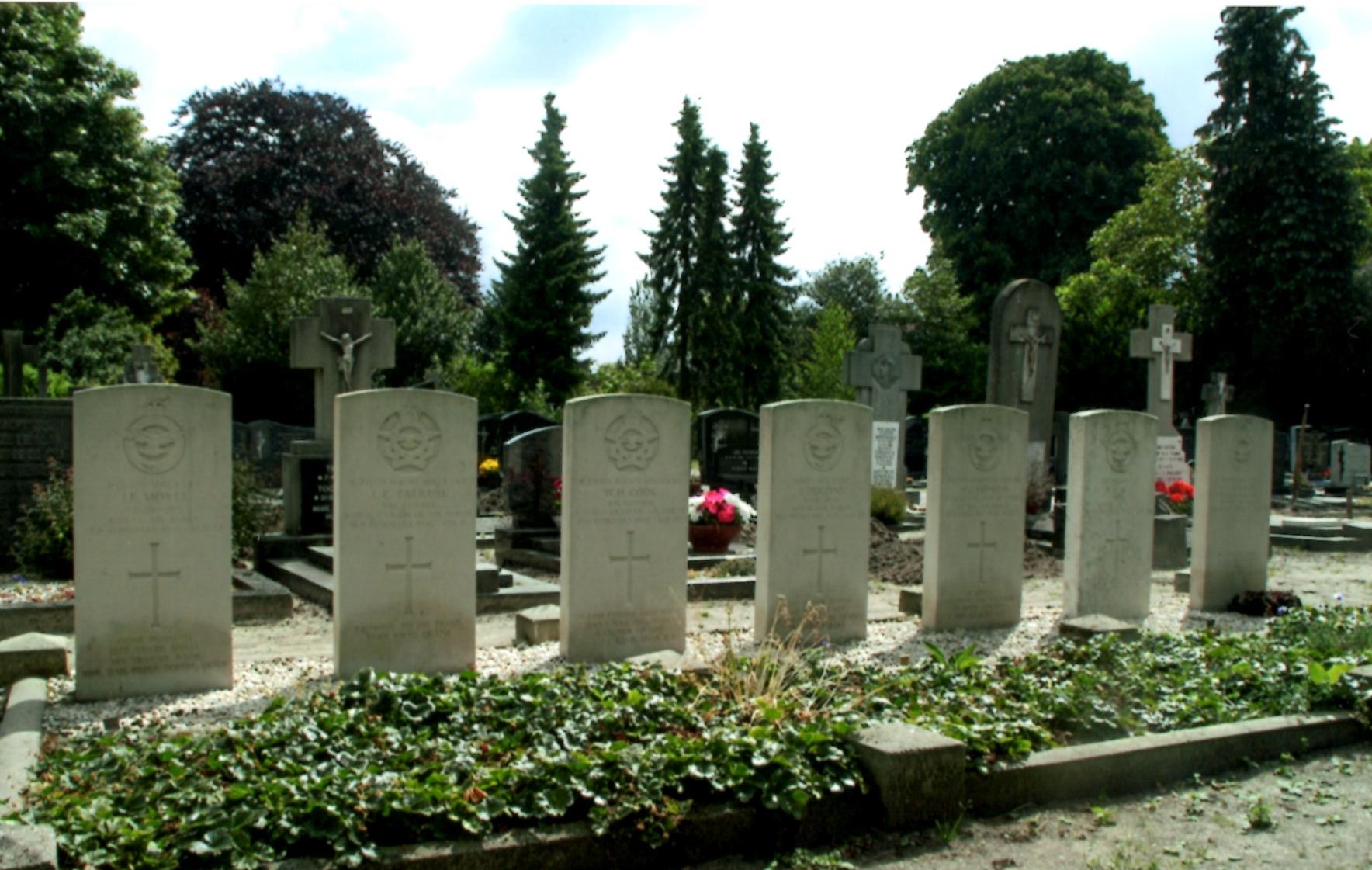
Although the author has visited the village of Westerbeek and William’s grave, the photographs of the graves seen here were kindly supplied by Stan O’Connor.
Life timeline
-
Born — son of John and Eva May Howson
-
Lived at 19 Castle Road, Kendal, with siblings Harry and Ethel
Approximate — at some point in the 1930s. Worked as an apprentice draughtsman.
-
Voluntarily enlisted in the RAF
Initially placed in the reserve.
-
Completed training as air gunner and wireless operator
Training continued through late 1940 and early 1941.
-
Posted to 296 Squadron
Initially used for dropping leaflets over France, then became a squadron for dropping paratroopers.
-
Posted to anti-aircraft cooperation unit, then 577 Squadron
577 practised bombing home targets to give experience to the anti-aircraft crews.
-
Final transfer to 550 Squadron with Lancaster bombers
550 Squadron was based at North Killingholme in Lincolnshire — a No. 1 Group Bomber Command base. Promoted through the ranks from Leading Aircraftman to Warrant Officer 949392 W. J. Howson.
-
Killed in action over Westerbeek, the Netherlands, aged 25
In the late afternoon of 3rd February 1945 the squadron took off to attack the Prosper Benzol Plant at Bottrop near Essen. The attack was believed successful but William's Lancaster was shot down by a night fighter and crashed into a field near the village of Westerbeek. William and all his crew were killed.
-
Buried at Westerbeek Roman Catholic Churchyard, the Netherlands
Buried by the local Dutch people in the village churchyard. The seven aircrew lie side by side. These graves and four British soldiers' graves are tended by local Dutch people. Outside on the village green lies a scaled sculptured model of the Lancaster tail plane made from metal of the downed aircraft. Headstone: 'He rests content and so must we.' Also commemorated on the Natland War Memorial.