
George William Armer
Biography
As 1942 dawned, the nation moved into the third year of war. Everything was going the way of the Axis Forces. In the Far East and Pacific the Japanese captured many islands, including the Philippines from the Americans and Singapore — Churchill described the fall of Singapore as the worst disaster in British military history. In the Atlantic the convoy system was reducing losses to U-boats, but rationing was tightened. The Royal Navy and Merchant Navy took heavy losses supplying Russia and Malta; in April King George VI awarded the little Mediterranean island of Malta the George Cross.
Two raids on the French coast were attempted, a semi-successful one at St. Nazaire and a disastrous one at Dieppe, which cost thousands of lives. Everywhere the Allies were in retreat — in Burma, North Africa and Russia. But as the year-end approached, the tide began to turn. At Stalingrad the German Sixth Army was surrounded; in North Africa Montgomery’s Eighth Army defeated the German-Italian Army at El Alamein. Churchill described the victory as “the end of the beginning.” Throughout, RAF Bomber Command, including 15 Squadron, continually attacked targets in Germany.
George William Armer, born on the 4th May 1912, was the youngest son of Robert John and Jane Armer. George had four older siblings: Richard, Eric, Phoebe and Joan. The family lived at 17 Helmside, and it is believed all the children went to St Mark’s School. Like so many families who lived in Oxenholme, the Armers were associated with the railways. Robert was an engine driver for the London and North Western Railway Company, and later the London Midland and Scottish Railway. Richard and Eric followed their father and became engine drivers, whereas George and his two sisters went to university and became teachers. Only Eric and Joan married, and it is believed there are no surviving members of the family.
Service Record
George — as a schoolmaster — was in a reserved occupation, but he joined the RAF Volunteer Reserve and enlisted on the 2nd December 1940. His number was 1220830 and eventually he became a sergeant. He was nearly 6 feet in height, with black hair and grey eyes. After a period in the reserve he went to an initial training wing, then flying training school, aircrew refresher school, observer school, before a conversion unit and qualifying as a navigator.
George — or “Bill”, as he was known in the RAF — may have done some training on Lancasters but became part of a crew on the 4th August 1942 and trained on Wellingtons before joining a Stirling Conversion Unit on the 16th September 1942.
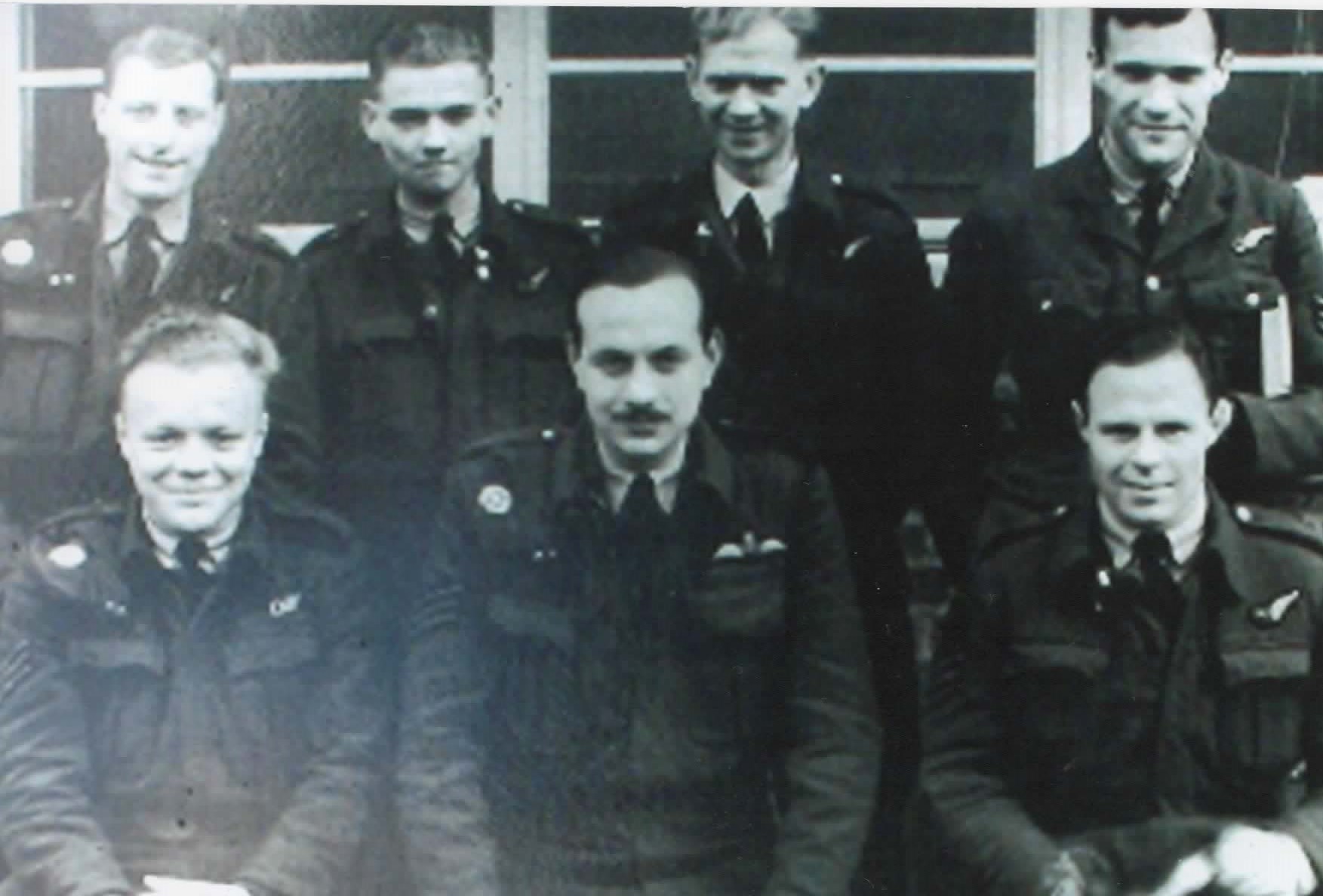
The photograph of the crew was taken in October 1942. Bill (holding a book) was older than the rest of the crew and apparently was regarded as something of a philosopher by the others, frequently leading discussions on topics of the day. It is understood he wrote a book entitled The Musings of a Schoolmaster.
Bill and the whole crew were posted to Bourn near Cambridge and 15 Squadron, with Stirling Bombers, on the 3rd January 1943. One of his first bombing raids may have been with another crew, but six others were with those in the photograph.
How They Died
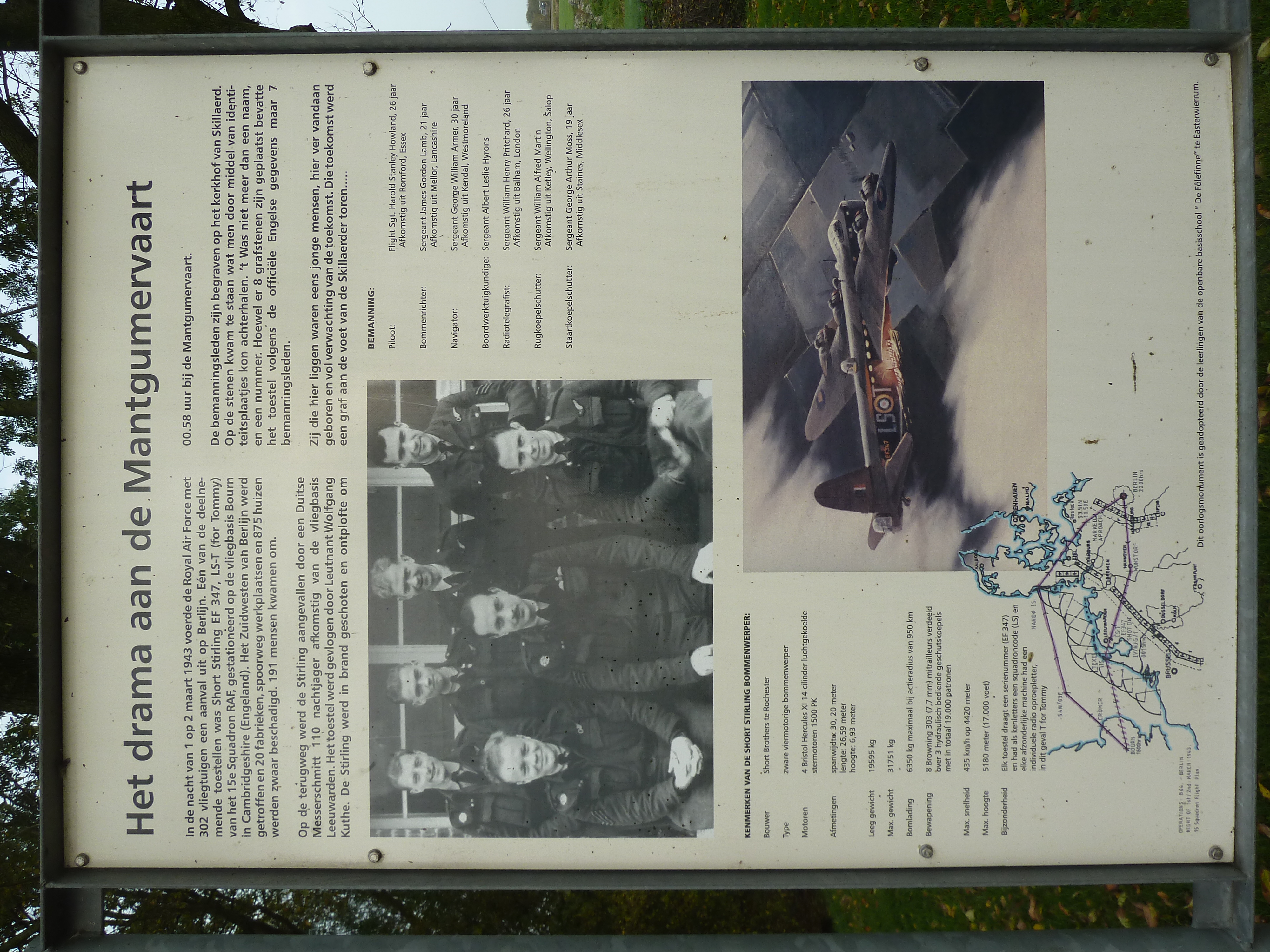
On 1st March the 56th raid on Berlin took place. Bill’s plane T for Tommy was one of over 300 on the raid, which took place in good weather conditions. The round trip would normally take nearly 8 hours. The mission was to bomb factories and the railway. It was to be the final mission for George and his comrades.
At 01:15 on March 2nd 1943 the Stirling was intercepted by a German night fighter whilst returning from the raid and set on fire. The burning Stirling circled the village of Mantgum, south of Leeuwarden, probably searching for a place to land — which suggested some of the crew were injured. Alerted by the sound and sight of the blazing plane, local villagers rushed to help as the plane crashed to the ground, but there was nothing to be done. Half-opened parachutes found near the plane suggested some may have been preparing to jump.
Where They Rest
The remains were gathered and buried two days later in the nearby cemetery at Schillaard by local people in the presence of German soldiers. The small cemetery surrounds the tower of a church — a church, that has long since disappeared.
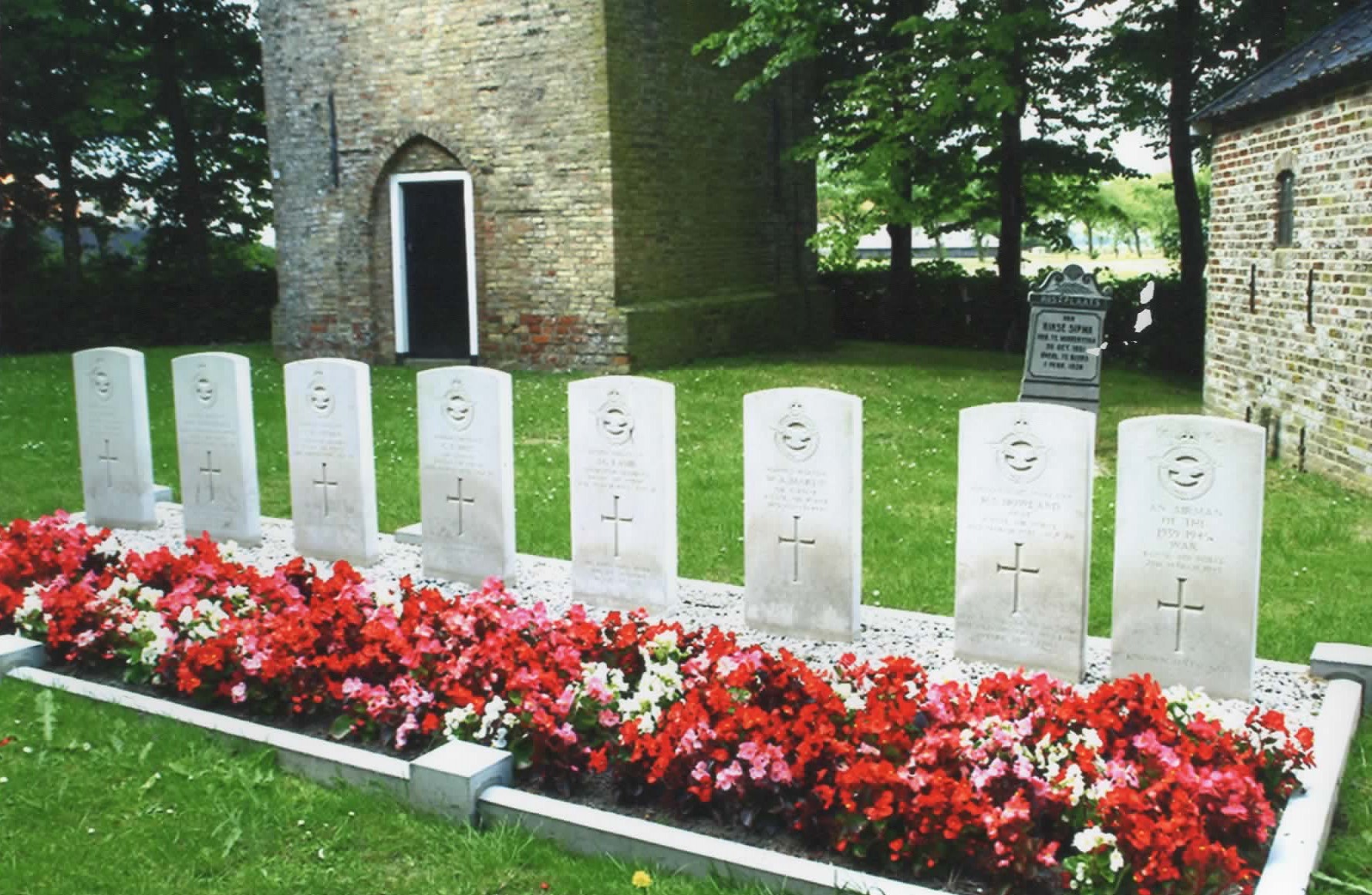
Words said at the graveside by local people: “Men whose hearts were no doubt filled with ideals and dreams, which were still to be fulfilled. This was not to be.” It was further said “they who fell for us shall not be forgotten” and in English “Rest in peace in a foreign land.”
The local community of Mantgum remember and honour their sacrifice every year. The general inscription for the graves is, “Those that are here were young people born far from here and in anticipation of a future life.” On George William Armer’s grave are found the words, “Most Dearly Loved.”
On the south wall of our church is a plaque to George William Armer, and his name is on our War Memorial.
With thanks to Stan O’Connor, Malcolm Field and Rob Knol — a Dutchman the author met on holiday — for their significant contributions to this account.
Life timeline
-
Born — youngest son of Robert John and Jane Armer
Family lived at 17 Helmside, Oxenholme. Four older siblings: Richard, Eric, Phoebe and Joan. Father was an engine driver, first for the London and North Western Railway and later the London Midland and Scottish Railway. Richard and Eric followed their father onto the engines; George and his two sisters went to university and became teachers.
-
Believed to have attended St Mark's School
Like all his siblings — they were all Oxenholme railway family. Approximate.
-
Working as a schoolmaster
A reserved occupation in WW2. Approximate start date — exact year not recorded.
-
Enlisted in the RAF Volunteer Reserve
Service number 1220830, eventually attaining the rank of sergeant. Nearly 6 feet tall, black hair, grey eyes.
-
Crewed up — joined a Wellington crew for further training
Known in the RAF as 'Bill', he was older than the rest of the crew and apparently regarded as something of a philosopher by the others, frequently leading discussions on topics of the day. It is understood he wrote a book entitled 'The Musings of a Schoolmaster.'
-
Joined a Stirling Conversion Unit
The crew photograph (now on his page) was taken in October 1942. Bill is the older man in the photo, holding a book.
-
Through training as a navigator — initial training wing, flying training, aircrew refresher, observer school
Conversion unit. Did some training on Lancasters.
-
Posted with the whole crew to RAF Bourn near Cambridge — 15 Squadron, Stirling Bombers
-
Took off in Stirling 'T for Tommy' for the 56th raid on Berlin
Over 300 aircraft involved; mission was to bomb factories and the railway. Round trip would normally take nearly 8 hours.
-
Killed at 01:15, returning from Berlin — Stirling shot down by night fighter, aged 30
The burning Stirling circled the village of Mantgum, south of Leeuwarden, probably searching for a place to land — suggesting some of the crew were injured. Local villagers rushed to help as the plane crashed but there was nothing to be done. Half-opened parachutes near the wreck suggested some had been preparing to jump.
-
Buried at Schillaard cemetery by local people in the presence of German soldiers
The remains of the crew were gathered and buried together two days after the crash, in the small cemetery surrounding the tower of a church that has long since disappeared. At the graveside local people said: 'Men whose hearts were no doubt filled with ideals and dreams, which were still to be fulfilled.' On George's grave: 'Most Dearly Loved.' The local community of Mantgum honour the crew's sacrifice every year. Also commemorated on the south wall of St Mark's Church and on the Natland War Memorial.